

- 1. SARMs vs Supplements (the biggest lie)
- 2. SARMs vs Creatine
- 3. SARMs vs Fat Burners (pure marketing theater)
- 4. SARMs vs “Natural Testosterone Boosters”
- 5. SARMs vs Steroids (maximum results, maximum side effects)
- 6. SARMs vs Peptides (recovery tools, not muscle builders)
- 7. SARMs vs Prohormones (why one died and the other replaced it)
- 8. SARMs vs TRT (temporary enhancement vs lifelong replacement)
- 9. SARMs vs HGH (growth hormone wins — at a price)
- Bottom Line & Conclusion
- References
- Recommended Products
Most discussions about performance enhancement collapse into extremes: “Supplements are useless” or “just do steroids”. SARMs vs “something else” comparisons often resort to basic “to each their own” advice that does not provide any answers. Neither is helpful.
We’ve decided to bring medicine, science, and pure expertise to the table. Because in reality, performance enhancement exists on a spectrum, not a switch.
And this is what SARMs vs Everything comparison looks like:
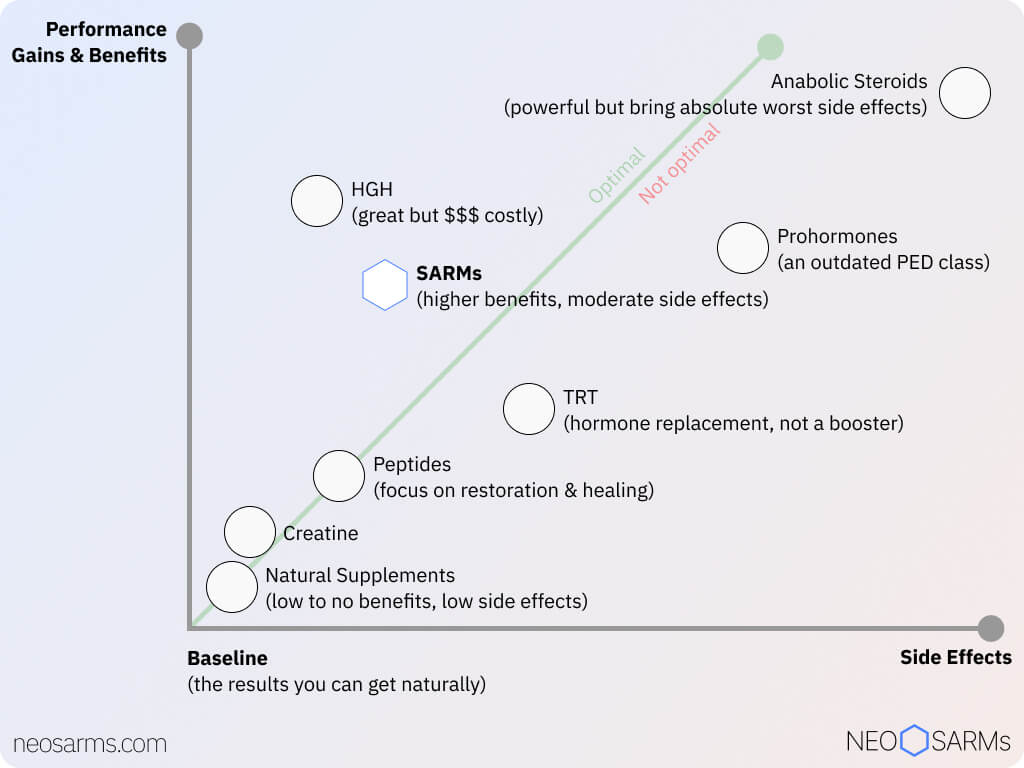
On one axis, you have performance gains and benefits — strength, muscle growth, recovery, body composition.
On the other, you have side effects and long-term costs — hormonal suppression, organ strain, lifestyle commitment.
This chart visualizes where the most common performance-enhancing tools actually land when you stop listening to marketing and start looking at mechanisms.
Now let’s take a closer look at each of them and compare SARMs vs all the rest PEDs side by side.
1. SARMs vs Supplements (the biggest lie)
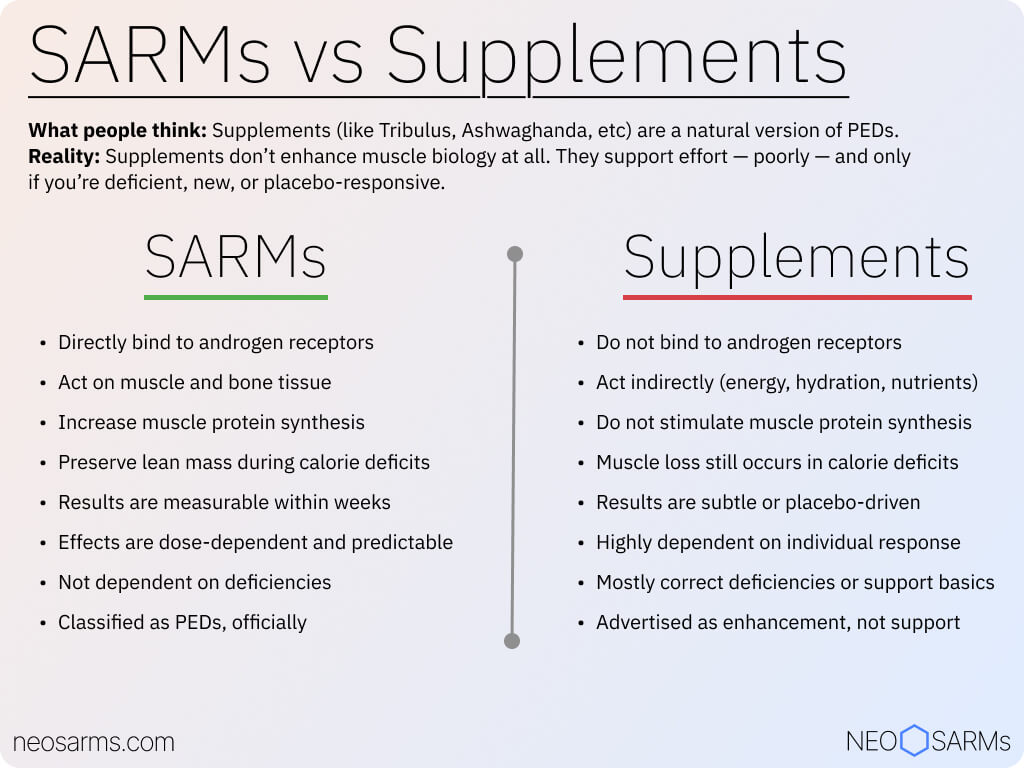
You’ve probably seen how supplements are marketed:
- “Boost testosterone”;
- “Burn fat + build muscle”;
- “One scoop solves everything”;
- “Clinically dosed” (almost never).
So what actually happens? In every pack (most likely priced for 10-100x margins, you get:
- Dozens of weak ingredients stacked together;
- Each ingredient underdosed to avoid cost;
- Results depend almost entirely on individual response;
- Diminishing returns after weeks (placebo fades).
Here are some typical examples (and why they, quite frankly, are just a scam):
Tribulus Terrestris
Marketed as a testosterone booster, we know from studies that it works in rats, but not in trained humans. Might increase libido, not muscle. And has absolute zero androgen receptor activity.
Fenugreek Extract
Mild effect on blood sugar and libido, with “mild” here being generous. No reliable increase in free testosterone. It’s a classic “feel-good” supplement, not anabolic.
D-Aspartic Acid
Short-term hormonal bump in untrained men — because the bump is simply not significant enough to feel if you’re already working out. Often reduces testosterone with continued use — the exact opposite of the effect men need.
Reality check: supplements promise systemic change but never touch the actual muscle-growth switch.
| Supplements not working? | Products like creatine, Tribulus, or “test boosters” don’t interact with muscle-building pathways. If results feel subtle or inconsistent, that’s why. |
| Next logical step | Try Ostarine (MK-2866) or ACP-105 — mild, controllable SARMs designed for body recomposition and lean mass retention without hitting as hard as steroids. |
Sources:
- D-aspartic acid supplementation combined with 28 days of heavy resistance training has no effect on body composition. https://europepmc.org/article/med/24074738;
- The effects of d-aspartic acid supplementation in resistance-trained men over a three month training period: A randomised controlled trial https://pubmed.ncbi.nlm.nih.gov/28841667/;
- Examining the Effects of Herbs on Testosterone Concentrations in Men: A Systematic Review https://www.sciencedirect.com/science/article/pii/S2161831322001028;
- Effects of Tribulus (Tribulus terrestris L.) Supplementation on Erectile Dysfunction and Testosterone Levels in Men https://pmc.ncbi.nlm.nih.gov/articles/PMC11990417/.
2. SARMs vs Creatine
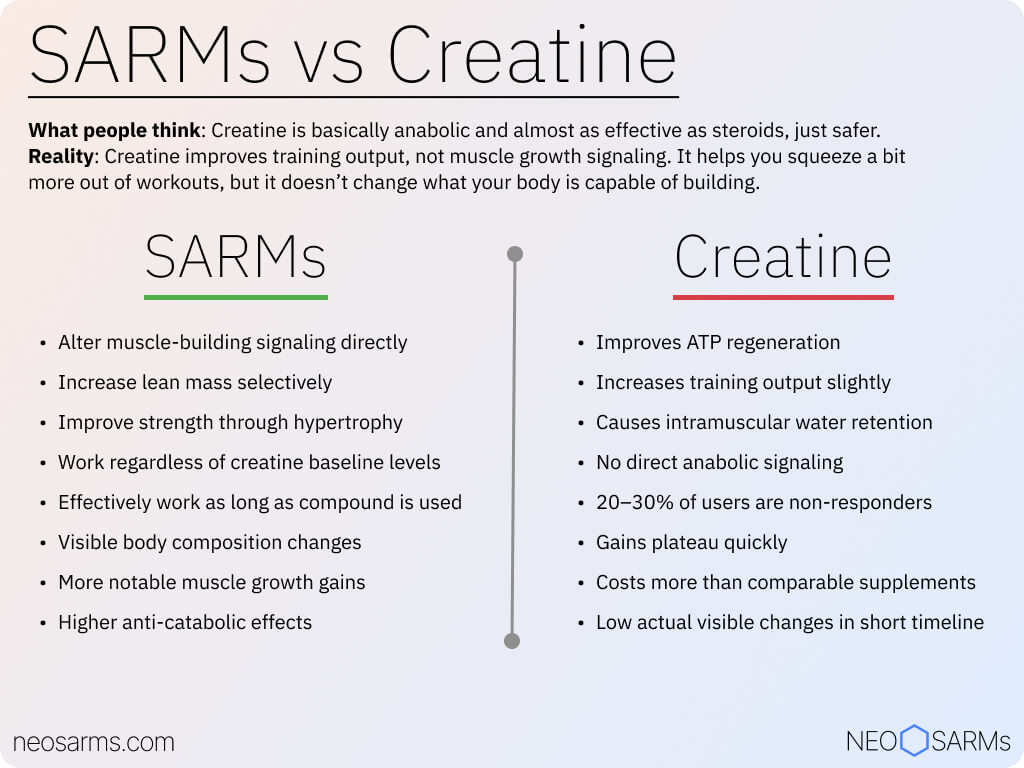
Creatine, the gold standard supplement, is an effective supplement. No doubt in that. Among all performance enhancement supplements, it’s probably the one delivering peak actual results. So what do these results look like?
- Improves ATP regeneration;
- Increases strength output slightly;
- Causes water retention inside muscle cells;
- No direct muscle-building signals;
So why does creatine still disappoint so many? Because — as with all supplements — the effect is indirect and extremely dependent on the personal response:
- Non-responders exist (about 20-30% of all, so every 3rd fitness enthusiasts gets nothing from creatine)
- Gains plateau fast;
- No effect on fat loss;
- Stops working the moment training stimulus stalls.
It’s a great tool for absolute beginners — yet, if you have calorie intake on point and don’t live a sedentary lifestyle — it’s not significant enough to compare to SARMs, peptides, or AAS.
Other “performance” supplements fall into the same category
Same goes for the majority of “gym bar” compounds that don’t really look correct in SARMs vs something else comparisons:
- Beta-Alanine – burning sensation, not muscle growth;
- Citrulline Malate – pumps, not tissue change;
- BCAAs – useless if protein intake is already adequate.
Most existing (and aggressively marketed) supplementation helps you train harder. It does nothing to change muscle biology.
Sources:
- Creatine in Health and Disease https://www.mdpi.com/2072-6643/13/2/447;
- Effects of creatine supplementation on muscle strength gains—a meta-analysis and systematic review https://pmc.ncbi.nlm.nih.gov/articles/PMC12665265/;
- Acute Creatine Monohydrate Supplementation: A Descriptive Physiological Profile of Responders vs. Nonresponders https://www.researchgate.net/publication/8390696.
3. SARMs vs Fat Burners (pure marketing theater)
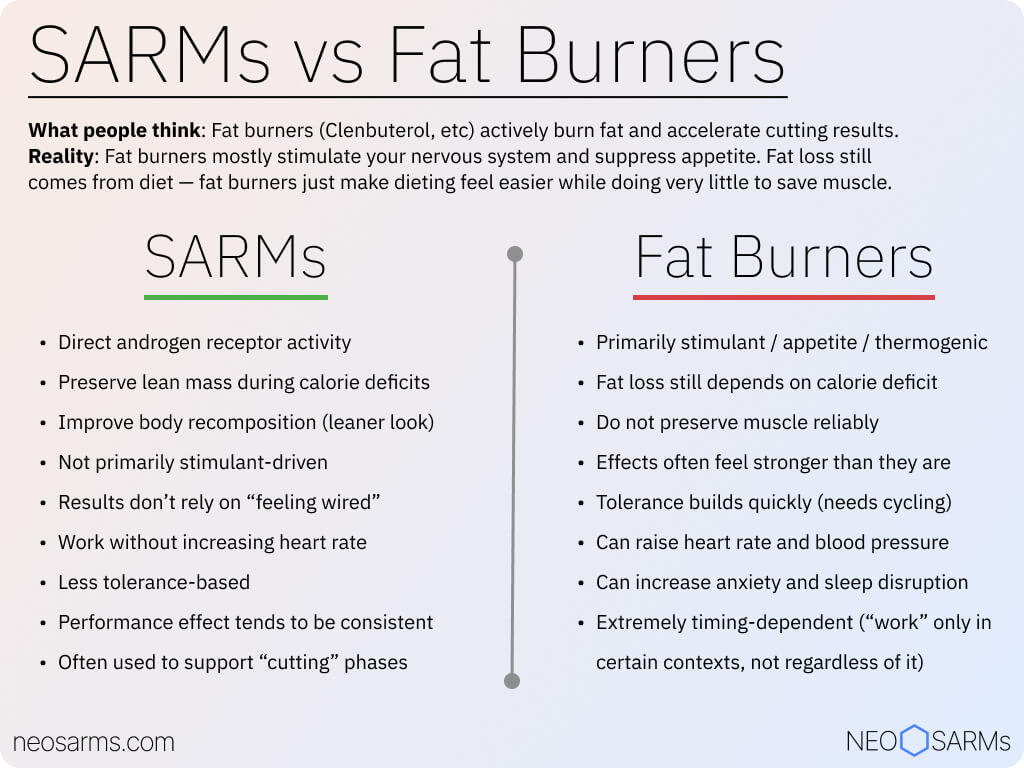
Fat burners are usually:
- Caffeine;
- Yohimbine;
- Green tea extract;
- Capsaicin.
What do they actually do? If we separate most existing fat burners into 4 groups, they most likely provide one of these effects:
- Raise heart rate, slightly
- Raise body temperature, slightly (thermogenics)
- Suppress appetite, slightly (suppressants)
- Alter sugar levels (hello, Ozempic).
Do fat burners work as opposed to SARMs?
We don’t claim none of the most popular fat burners work. However, most existing options are not actually burning fat in any meaningful way.
For example:
- Yohimbine: works only in fasted state, raises cortisol (the stress hormone), terrible for anxious people (most of modern Canada’s population);
- Green Tea Extract: provides marginal thermogenic effect, is meaningless without a calorie deficit;
- CLA: heavily marketed, almost no real-world effect, long-term use may worsen insulin sensitivity.
Reality check: fat burners don’t burn fat — diet does. Fat burners just make dieting more miserable (in exchange probably lowering your appetite a little).
SARMs don’t burn fat either — they preserve your muscle tissue on a cut. However, if we compare SARMs vs fat burners directly, SARMs — at least — do not claim to magically melt away your stubborn abdominal fat.
| Tired of fat burner side effects? | Most over-the-counter fat burners rely on stimulants that raise heart rate, spike anxiety, and wreck sleep — often for very little real fat loss. |
| Smarter alternative | Try Cardarine (GW-501516) for endurance-driven fat loss or Ostarine (MK-2866) to preserve lean mass while cutting — without the jittery stimulant crash. |
Sources:
- The effects of caffeine intake on weight loss: a systematic review https://pubmed.ncbi.nlm.nih.gov/30335479/;
- The effects of green tea extract supplementation on body composition, obesity-related hormones and oxidative stress markers: a grade-assessed systematic review https://www.cambridge.org/core/journals/british-journal-of-nutrition/article/effects-of-green-tea-extract-supplementation-on-body-composition;
- The efficacy of long-term conjugated linoleic acid (CLA) supplementation on body composition in overweight and obese individuals https://pubmed.ncbi.nlm.nih.gov/21990002/;
- Efficacy of conjugated linoleic acid for reducing fat mass: a meta-analysis in humans https://www.sciencedirect.com/science/article/pii/S0002916523280557;
- Effect of green tea, caffeine and capsaicin supplements on the anthropometric indices: A meta-analysis of randomized clinical trials https://www.sciencedirect.com/science/article/abs/pii/S1756464618301415.
4. SARMs vs “Natural Testosterone Boosters”
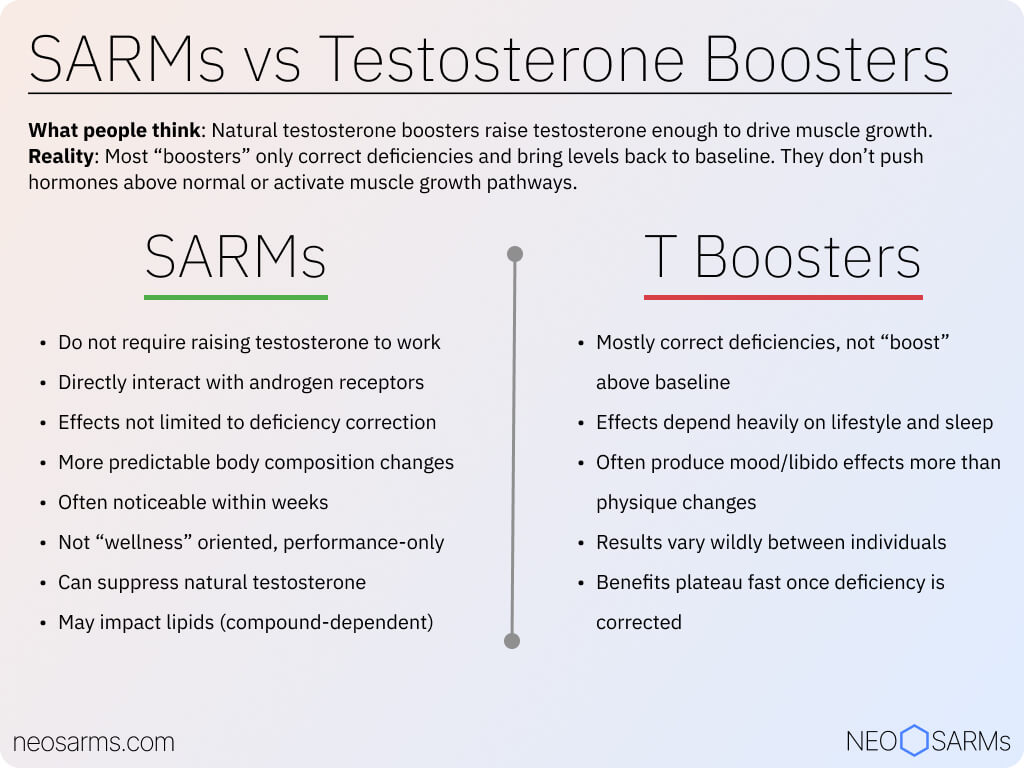
This category deserves special disrespect. Not because of the compounds in it: just because it fails to deliver what promotional materials promise, and most of these “boosters” were never meant to do it anyway:
- Zinc;
- Magnesium;
- Ashwagandha;
- Boron.
What do they actually do?
Most importantly — and that’s a real effect — they correct deficiencies (if you have them).
They may help stressed, sleep-deprived people feel better — slightly, and only if you have a deficiency of this compound in the first place.
These are not boosters. They don’t “boost” anything so you get magical muscle growth out of nowhere. These are natural substances your body needs in certain amounts.
If your diet is poor and lacks (for example) Zinc, Zinc supplementation will make you feel better. Not because it “boosts” something: just because you finally get the amount of ZInc you’re supposed to. It brings you to baseline — not above it. So it is technically incorrect to compare SARMs vs testosterone boosters: SARMs bring it up, and boosters just align it with the minimum.
Sources:
- Effect of fenugreek extract supplement on testosterone levels in male: A meta-analysis of clinical trials https://pubmed.ncbi.nlm.nih.gov/32048383/;
- Examining the Effects of Herbs on Testosterone Concentrations in Men: A Systematic Review https://www.sciencedirect.com/science/article/pii/S2161831322001028.
5. SARMs vs Steroids (maximum results, maximum side effects)
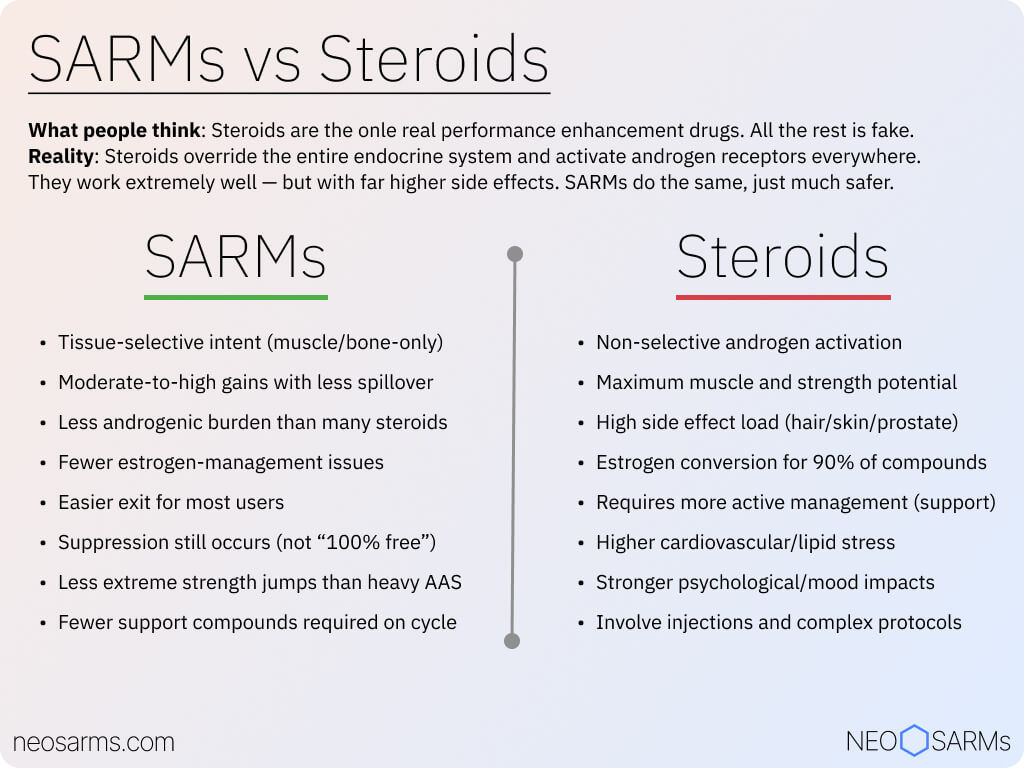
Anabolic steroids are often discussed in extremes — either glorified or demonized.
In reality, neither approach helps understanding. So let’s strip the mythology:
- They are not “strong supplements.”
- Not “just testosterone.”
- Not a more powerful version of supplements.
They are a full endocrine override.
How anabolic steroids are usually framed?
You’ve probably heard some version of this:
- “Testosterone is natural”
- “If estrogen is controlled on PCT, it’s safe”
- “Doctors prescribe TRT, so it’s basically medicine”
- “Everyone at the gym is on something anyway”
This framing makes steroids sound like a logical next step. And that framing is incomplete at best.
What do anabolic steroids actually do?
Unlike supplements, peptides, or SARMs, anabolic steroids do not nudge your system.
They replace it.
Once exogenous (coming from outside your body) androgens are introduced in supraphysiological (more than your body naturally makes) amounts, your body stops asking questions and stops making decisions. The hypothalamic-pituitary-testicular axis (the one responsible for natural hormone production) shuts down, and hormone regulation becomes external.
In practice, this means:
- Androgen receptors are activated everywhere — muscle, skin, scalp, prostate, heart;
- Muscle protein synthesis increases dramatically;
- Recovery accelerates beyond natural capacity;
- Side effects scale with dose, duration, and genetics — but never drop to zero.
This is why steroids work so well — and why they are fundamentally different from SARMs.
Muscle-building on steroids, and what the gains really cost your health
Here’s a closer look at each of the most common steroids on the market:
Testosterone (the “safe base” myth)
Testosterone is often presented as the responsible option — the foundation of all cycles, the one compound “your body already knows.”
What’s usually left out:
- Endogenous testosterone production shuts down;
- Hematocrit and blood pressure tend to rise;
- Estrogen management becomes mandatory;
- Coming off often feels worse than starting.
The trap here is not toxicity — it’s comfort. Testosterone works, feels good, and makes stopping psychologically and physiologically difficult.
It’s not dangerous because it’s harsh. It’s dangerous because it’s made to stay on. TRT is — in most cases — ”for life”.
Dianabol (fast gains, fast consequences)
Dianabol is marketed — implicitly — as a fast transformation agent. A kickstart. A way to feel anabolic immediately.
What that speed actually represents:
- Rapid water retention (it’s puffiness, not muscles);
- Severe strain on liver enzymes;
- Major lipid profile disruption;
- Gains that largely disappear post-cycle.
Yes, weight goes up fast. So do blood markers. Dianabol doesn’t build durable muscle — it builds temporary mass and permanent problems.
Trenbolone (the worst of them all)
Trenbolone exists in a category of its own, both in reputation and in reality. It is often framed as the “ultimate” compound — dry gains, recomposition, no estrogen. That’s why, if you look at YouTube, “laughing at teenagers that do Trenbolone” is almost its own niche.
Here’s what’s much less emphasized:
- Profound impact on sleep and mood;
- Elevated anxiety and irritability;
- Cardiovascular strain;
- Zero tolerance for mistakes.
Tren works because it does not care what it disrupts. It just hits everything. So you get muscle growth — along with a ton of other guaranteed negative effects. That includes neurotransmitters, stress response, and emotional regulation.
Steroids marketed for fat loss (a framing problem)
No anabolic steroid burns fat in the way people imagine. Fat loss still comes from a calorie deficit. Steroids simply make it easier to hold muscle while dieting — sometimes at the expense of joints, lipids, and connective tissue.
Winstrol
Often described as a “cutting” compound. In practice:
- Dries out joints and connective tissue;
- Crushes HDL cholesterol;
- Offers no actual fat-burning mechanism.
The “dry look” is water manipulation, not fat loss.
Anavar
Often called “mild” or “safe.” More accurately:
- Less dramatic side effects, not absent ones;
- Still suppressive;
- Hepatotoxic;
- And lipid-negative.
It leaks damage slowly instead of loudly.
Reality check: steroids are not evil, and they are not magic. They are effective because they are indiscriminate. They do not select tissues, do not prioritize longevity, do not stop working when you want them to. That’s the tradeoff.
| Steroid-level gains sound tempting? | Anabolic steroids deliver rapid muscle growth, but often come with heavy suppression, systemic side effects, and long-term commitment. |
| High-impact alternative | Try Ligandrol (LGD-4033) for lean mass, RAD-140 (Testolone) for strength-dominant size, or YK-11 for advanced, steroid-like hypertrophy — without fully overriding your endocrine system. |
What SARMs actually do better than anabolic steroids (and why they exist)
If we look at the SARMs vs steroids comparison directly, SARMs exist precisely because steroids are too powerful for most use cases.
Steroids are the top of the effectiveness pyramid — and the top of the cost pyramid. SARMs sit below them not because they “don’t work,” but because they are designed to work with constraints. Selectively. With comparable effects — and incomparably lower “health costs”.
If anabolic steroids already exist — and work so well — then why did SARMs appear at all?
Because steroids are too effective in the wrong places.
Anabolic steroids activate androgen receptors everywhere. SARMs were designed to prefer muscle and bone tissue, while reducing activity in areas where androgen signaling causes problems.
In practical terms, this selectivity of SARMs translates into:
- Lower androgenic spillover (skin, scalp, prostate — compound-dependent);
- Reduced estrogen-related complications (no aromatization for most SARMs);
- More predictable dose-response;
- Less pressure toward lifelong “blast-and-cruise” use.
It means they are constrained by design:
Steroids don’t care where they act and whether it’s bad or good for you. SARMs actually do care. And act only where you need them to.
In simple terms, steroids solve muscle growth by brute force, and SARMs solve it by limiting collateral damage. That’s why SARMs sit below steroids on the effectiveness scale — and far below them on the long-term cost scale.
Sources:
- Anabolic-androgenic steroids and cardiovascular risk https://pmc.ncbi.nlm.nih.gov/articles/PMC6797160/;
- Cardiac structure and function in anabolic-androgenic steroid users: a 16-year follow-up study https://openheart.bmj.com/content/12/2/e003376;
- Anabolic androgenic steroid-induced liver injury: An update https://pmc.ncbi.nlm.nih.gov/articles/PMC9331524/.
6. SARMs vs Peptides (recovery tools, not muscle builders)
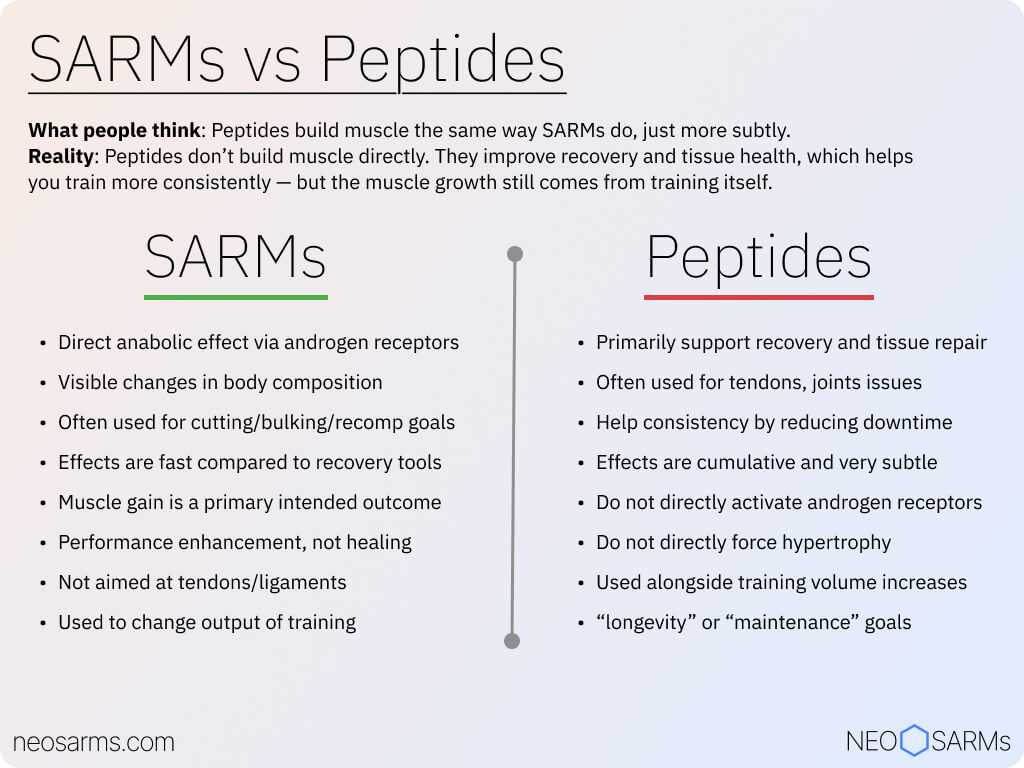
Peptides often get lumped together with SARMs or steroids — and that’s simply incorrect. They don’t compete with SARMs. They operate on a different axis entirely.
Peptides do not activate androgen receptors. They do not stimulate muscle protein synthesis directly. They do not force hypertrophy.
What they do instead is much more boring — they improve the conditions under which training happens. It barely affects how massive you look, how strong you are, and how much weight you lose. It simply affects your body’s state while you do it (still naturally).
Examples:
BPC-157
Promotes tendon, ligament, and gut tissue repair. Reduces downtime from injuries. Lets you train consistently instead of sporadically.
TB-500
Supports soft tissue healing and mobility. Useful when training volume is high and connective tissue becomes the limiting factor.
That’s it. No hidden anabolic effect, and no magical muscle gain. Peptides don’t do that. They are support tools — and good ones — but it’s an entirely different goal.
Sources:
- A Phase 2 Study on Effect of Thymosin Beta 4 on Wound Healing in Patients With Epidermolysis Bullosa https://clinicaltrials.gov/study/NCT00311766;
- Progress on the Function and Application of Thymosin β4 https://pmc.ncbi.nlm.nih.gov/articles/PMC8724243;
- Emerging Use of BPC-157 in Orthopaedic Sports Medicine: A Systematic Review https://pmc.ncbi.nlm.nih.gov/articles/PMC12313605/;
- Regeneration or Risk? A Narrative Review of BPC-157 for Musculoskeletal Healing https://pmc.ncbi.nlm.nih.gov/articles/PMC12446177/.
7. SARMs vs Prohormones (why one died and the other replaced it)
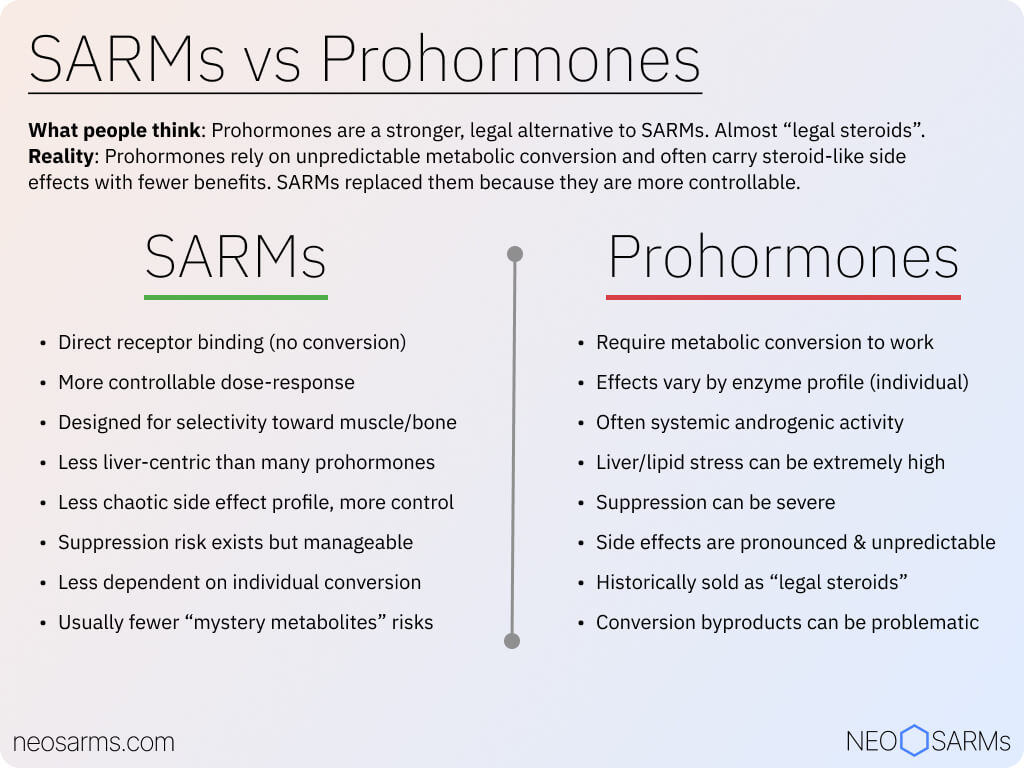
Prohormones were the original “legal steroid workaround.” They had their moment — and then they largely disappeared for a reason. We still want to compare SARMs vs prohormones, though, just for the sake of transparency.
Prohormones are inactive precursors that your body converts into active anabolic hormones. On paper, that sounds clever. In reality, it’s messy.
What actually happens with prohormones:
- Conversion is inefficient and unpredictable
- Androgenic activity is systemic, not selective
- Liver strain is common (many are 17-aa or close cousins)
- Lipids get hit hard
- Shutdown is real — often comparable to steroids
In other words, you don’t control where or how much activity happens. You swallow a compound and hope your enzymes behave.
That’s why compounds like androstenedione, superdrol-era derivatives, and “designer prohormones” earned a reputation for:
- Looking legal;
- Acting illegal;
- And breaking people faster than expected.
SARMs were developed precisely to solve this problem.
Instead of relying on metabolic conversion, SARMs bind directly to androgen receptors — preferentially in muscle and bone — without needing your liver to turn them into something else first.
So the practical difference is simple:
- Prohormones = indirect, messy, liver-heavy, unpredictable
- SARMs = direct, selective, dose-controllable
Reality check: prohormones didn’t disappear because they “worked too well.” They disappeared because they worked too recklessly.
Sources:
- Acute Hepatitis and Personality Change in a 31-Year-Old Man Taking Prohormone Supplement SUS500 https://www.sciencedirect.com/science/article/pii/S0033318210707076;
- Mission Compromised? Drug-Induced Liver Injury From Prohormone Supplements Containing Anabolic–Androgenic Steroids in Two Deployed U.S. Service Members https://academic.oup.com/milmed/article-abstract/181/9/e1169/4159850.
8. SARMs vs TRT (temporary enhancement vs lifelong replacement)
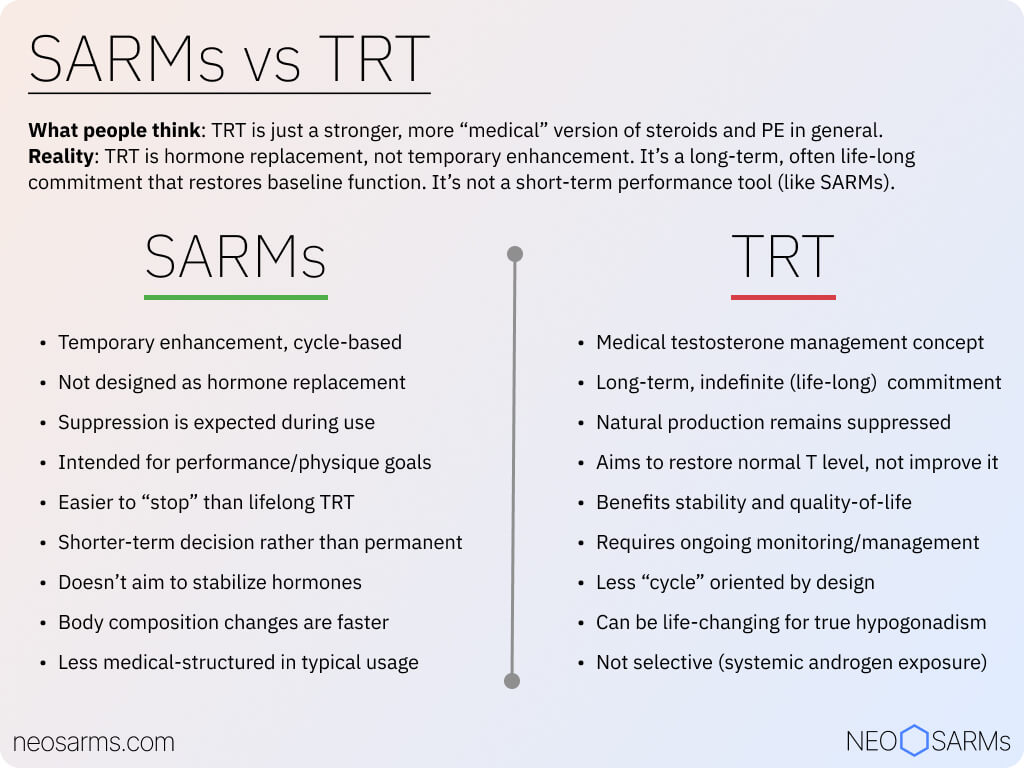
SARMs vs TRT comparison comes up a lot — especially from men in their 30s and 40s — and it’s often framed incorrectly.
TRT is not an enhancement. TRT is hormone replacement.
Once you start TRT, you are no longer asking your body to produce testosterone. You’re outsourcing that job, usually indefinitely.
What TRT does well:
- Restores testosterone to physiological levels;
- Improves quality of life in genuinely hypogonadal men;
- Stabilizes hormones long-term (with medical oversight).
What TRT is not:
- A short-term experiment
- A reversible cycle
- A casual upgrade
SARMs, by contrast, are temporary enhancement tools. They suppress natural testosterone — yes — but they are not designed to replace it permanently.
So the real distinction is not effectiveness. It’s commitment.
Reality check: if you’re deciding between SARMs and TRT, you’re not choosing compounds — you’re choosing whether you’re ready for a lifelong protocol.
Sources:
- Testosterone Therapy for Hypogonadism Guideline Resources https://www.endocrine.org/clinical-practice-guidelines/testosterone-therapy;
- Cardiovascular Safety of Testosterone-Replacement Therapy https://www.nejm.org/doi/full/10.1056/NEJMoa2215025;
- Rises in Hematocrit Are Associated With an Increased Risk of Major Adverse Cardiovascular Events in Men Starting Testosterone Therapy: A Retrospective Cohort Claims Database Analysis https://www.auajournals.org/doi/10.1097/JU.0000000000003786.
9. SARMs vs HGH (growth hormone wins — at a price)
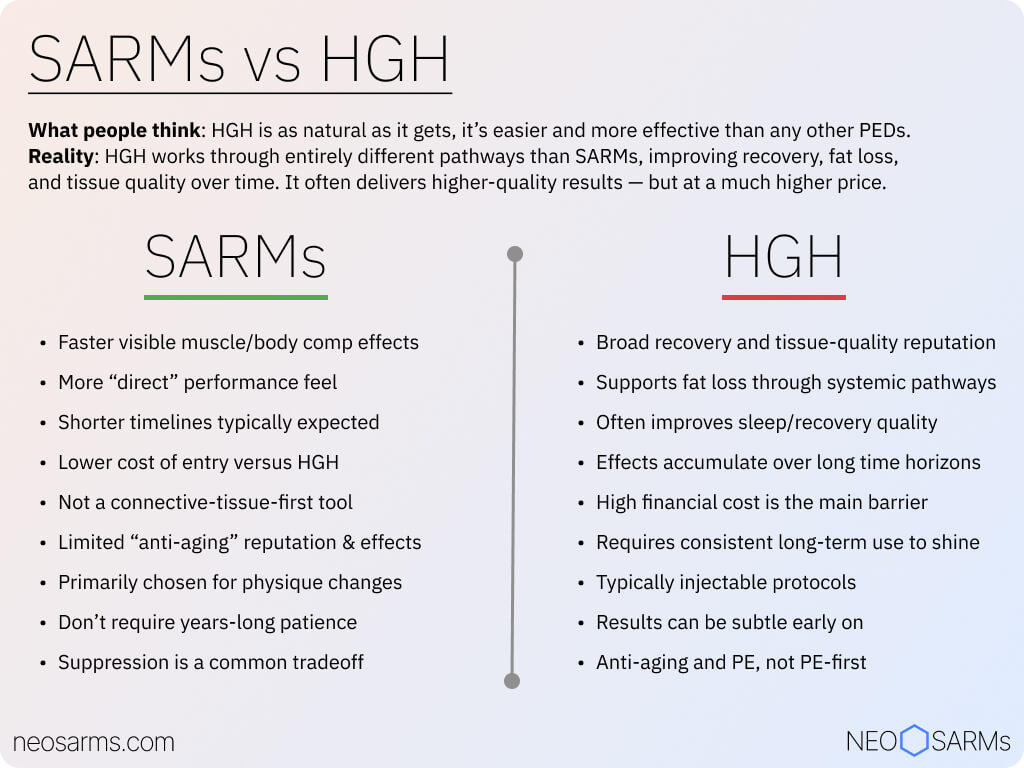
HGH sits in a category of its own.
It does not activate androgen receptors. It does not directly force muscle protein synthesis. And yet — when done properly — it works.
What HGH actually does:
- Improves recovery and sleep quality;
- Enhances fat loss through lipolysis;
- Supports connective tissue, skin, and joint health;
- Creates a long-term anabolic environment.
This is why HGH is a staple in high-level bodybuilding and longevity-focused protocols. Not because it’s flashy — but because it’s foundational.
So why doesn’t everyone just use HGH? Because it’s expensive. Extremely. And also because:
- Real HGH requires injections
- Dosing must be consistent and long-term;
- Benefits are slow and cumulative.
So, yes, HGH wins on quality and longevity. However, SARMs win on accessibility, speed, and cost-efficiency.
Most people don’t choose SARMs over HGH because SARMs are “better.” They choose them because HGH is financially and practically out of reach.
Sources:
- Effects of low dose versus high dose human growth hormone on body composition and lipids in adults with GH deficiency: a meta-analysis of placebo-controlled randomized trials https://link.springer.com/article/10.1007/s11102-014-0571-z;
- Effects of recombinant human growth hormone therapy in obesity in adults: a metaanalysis https://www.ncbi.nlm.nih.gov/books/NBK76985/;
- Body composition and quality of life in adults treated with GH therapy: a systematic review and meta-analysis https://pubmed.ncbi.nlm.nih.gov/21865409/.
Bottom Line & Conclusion
SARMs win.
SARMs win comparison to creatine, supplements and natural testosterone boosters — by being more effective. Comparison to HGH — by being more accessible. And ultimately SARMs win the comparison with steroids by being safer, more precise, and more targeted in action. This way, whichever substance comes after the “vs” in SARMs vs Something — this class of compounds is likely to win it.
Straight-forward and direct conclusion. Backed by studies and common sense.
Simple as that.
Neosarms is a trusted SARM manufacturer since 2010
We’ve operated as a wholesale laboratory for over a decade. Today, we make our products directly accessible to customers through our website — with the same standards, testing, and consistency.
Shop All SARMs-
Which is better: SARMs or steroids?
Steroids produce larger and faster gains, but with significantly higher systemic side effects and long-term costs. SARMs offer more controlled, selective muscle-building effects with lower overall burden. -
What is the difference between testosterone (TRT) and SARMs?
Testosterone replaces natural hormone production and is usually a long-term or lifelong therapy. SARMs are typically used as temporary performance-enhancing compounds and do not function as hormone replacement. -
Can you take SARMs while on TRT?
Some users do, but they serve different purposes. TRT stabilizes baseline hormone levels, while SARMs are used to enhance muscle growth or recomposition. Medical supervision is strongly recommended. -
Are SARMs more effective than supplements?
Yes. Supplements support training indirectly and do not activate muscle growth pathways. SARMs directly interact with androgen receptors involved in muscle and bone tissue.
-
Are SARMs safer than steroids?
Generally, yes — but “safer” does not mean “safe.” SARMs are designed to be more selective and carry fewer systemic effects, but they still involve risks and hormonal suppression. -
Are SARMs the same as peptides?
No. SARMs are anabolic agents that influence muscle growth, while peptides primarily assist recovery, healing, and connective tissue health. -
Which is better: SARMs or creatine?
Creatine improves training performance slightly but does not change muscle biology. SARMs produce more noticeable changes in muscle mass and body composition. -
Are SARMs stronger than fat burners?
Yes, but they serve different roles. Fat burners rely on stimulants and appetite suppression, while SARMs help preserve muscle during fat loss and improve overall recomposition. -
Are SARMs better for weight loss than fat burners?
SARMs do not burn fat directly, but they help retain lean mass during calorie deficits, which leads to better long-term body composition compared to stimulant-based fat burners. -
Are SARMs the same as prohormones?
No. Prohormones rely on metabolic conversion and often cause unpredictable side effects. SARMs bind directly to androgen receptors and are more targeted by design.
References
- The selective androgen receptor modulator GTx-024 (enobosarm) improves lean body mass and physical function in healthy elderly men and postmenopausal women: results of a double-blind, placebo-controlled phase II trial https://pmc.ncbi.nlm.nih.gov/articles/PMC3177038/;
- Systematic Review of Safety of Selective Androgen Receptor Modulators in Healthy Adults: Implications for Recreational Users https://pmc.ncbi.nlm.nih.gov/articles/PMC10204391/;
- Selective androgen receptor modulator use and related adverse events https://link.springer.com/article/10.1007/s00228-023-03592-3.

