
Support
SARMs are selective compounds, but they are not consequence-free. Depending on the compound, dose, duration, and individual response, SARMs can place stress on systems. You need SARMs cycle support compounds to counter it.

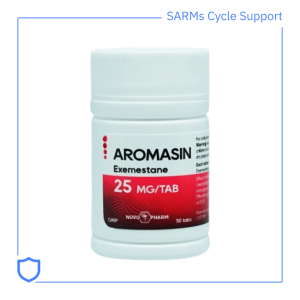


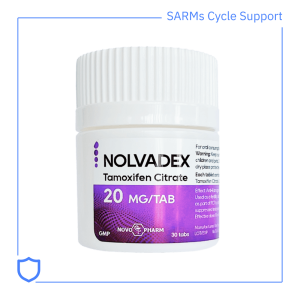

What “Support” in a SARM Cycle
Support products exist to manage stress points created by performance enhancement, not to “fix” something that is automatically broken:
- Hormonal signaling (HPTA suppression)
- Lipid profiles
- Liver enzymes
- Blood pressure
- Estrogen balance
- Recovery capacity
The role of cycle support is risk management and optimization, not overmedication. Proper support allows users to run cycles more predictably, recover more smoothly, and respond intelligently to side effects if and when they appear.
Why Support Products Matter With SARMs
Unlike anabolic steroids, SARMs are often used in:
- Lean bulks
- Cutting phases
- Recomposition cycles
- Endurance-focused stacks
These goals place different demands on the body. Support products allow users to match their intervention to the stress being applied, rather than using a one-size-fits-all approach.
Support can be:
- Preventative (basic organ support)
- Reactive (only used if symptoms or bloodwork justify it)
- Restorative (used after suppressive cycles)
Well-planned support improves:
- Cycle tolerance
- Recovery speed
- Long-term sustainability
- Confidence in cycle management
Core Categories of SARMs Support
Support products generally fall into several functional groups.
Post Cycle Therapy (PCT) Support
Used after suppressive SARMs cycles to help restore natural testosterone production.
These compounds work by stimulating or normalizing hormonal signaling rather than replacing hormones outright.
Used when:
- Testosterone suppression is confirmed or likely
- Moderate to strong SARMs were used
- Recovery feels slow or incomplete
Not always required, but critical after certain stacks.
Estrogen & Hormonal Balance Tools
These are reaction tools, not default cycle additions.
They are used only when:
- Estrogen-related symptoms appear
- Bloodwork supports estrogen imbalance
- Suppression creates unfavorable hormone ratios
In most SARMs cycles, estrogen control is not automatically necessary.
Cardiovascular & Blood Pressure Support
Some SARMs and performance compounds can:
- Affect lipid profiles
- Increase blood pressure
- Increase cardiovascular workload
Support in this category focuses on risk reduction, not masking issues.
Liver & Metabolic Support
Even though SARMs are not 17-alpha-alkylated steroids, some compounds:
- Elevate liver enzymes
- Stress glucose regulation
- Impact insulin sensitivity
Support here is often preventative and low-risk, especially in longer or stacked cycles.
Recovery & Quality-of-Life Support
These products improve:
- Sleep
- Joint comfort
- Training tolerance
- Overall well-being
They are often used during:
- Recomposition
- Endurance cycles
- Deload or recovery phases
Why Support Is Not “Mandatory for Everyone”
A common misconception is that SARMs require automatic pharmaceutical stacking. This is false.
Support should be:
- Goal-driven
- Dose-dependent
- Symptom-informed
- Bloodwork-guided
Overusing support compounds can be just as problematic as underusing them. Intelligent SARMs users do not “add everything” — they add what’s justified.
Support in Stacks vs Single Compounds
Stacks increase complexity, not just intensity.
When multiple compounds are used:
- Stress points may overlap
- Suppression may increase
- Recovery demands rise
Support becomes more relevant as:
- Stack size increases
- Cycle length extends
- Suppressive compounds are combined
This is why higher-tier stacks often reference support as preparation, not panic.
Bloodwork: The Foundation of Smart Support
Support decisions are best made with data, not assumptions.
Key markers often include:
- Testosterone (total & free)
- LH / FSH
- Estradiol
- Lipid panel
- Liver enzymes
- Fasting glucose / HbA1c
Support products should respond to numbers, not fear.
Support as Part of a One-System Approach
Support products are not separate from SARMs — they are part of the same system.
A complete SARMs cycle considers:
- Primary compound(s)
- Stack design
- Training load
- Nutrition
- Recovery
- Support (only where appropriate)
When used correctly, support enhances outcomes rather than complicating them.